Altitude Acclimatization Effects on Endurance Metrics in Highland Football, Thin-Air Tennis, and Mountain Horse Racing
Written by Casey Günther · Aug 20, 2026

Altitude Acclimatization Effects on Endurance Metrics in Highland Football, Thin-Air Tennis, and Mountain Horse Racing
Altitude acclimatization changes how athletes handle reduced oxygen availability, and researchers track these shifts through endurance metrics like sustained heart rate, lactate threshold, and recovery intervals across football matches played at elevation. Data from venues above 2,500 meters show that visiting teams experience a measurable drop in high-intensity running distance during the first 45 minutes, while local squads maintain closer to sea-level norms after several days of preparation. Observers note that these patterns extend beyond football into tennis tournaments held in highland locations and horse racing on mountain tracks, where layered betting structures incorporate performance adjustments derived from acclimatization studies.
Physiological Responses in Highland Football Matches
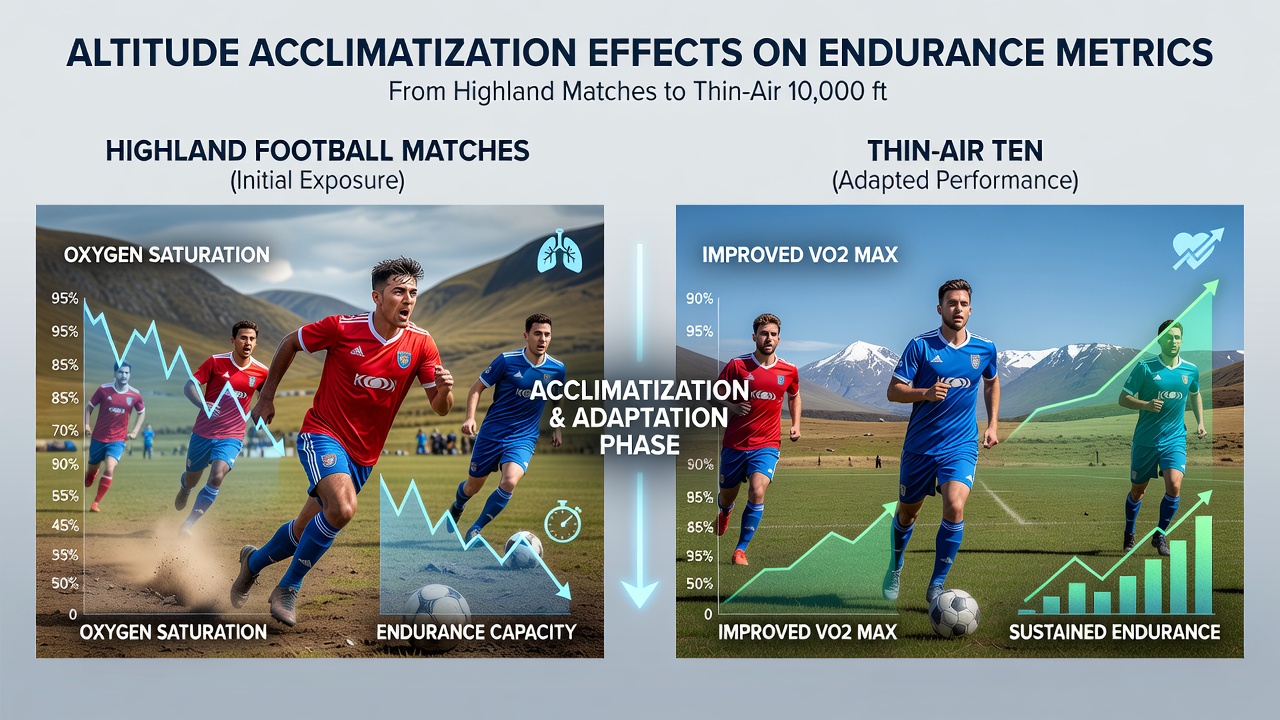
Football players competing at elevations such as those found in Bolivian or Mexican stadiums face immediate reductions in oxygen saturation that affect aerobic capacity within the first 15 minutes of play. Studies compiled by the World Health Organization indicate that unacclimatized athletes lose approximately 10 to 15 percent of their sea-level VO2 max at 3,000 meters, leading to earlier onset of fatigue and fewer sprints in the second half. Teams that arrive 10 to 14 days early demonstrate stabilized blood oxygen levels and improved repeat sprint ability, according to physiological monitoring conducted during international fixtures. Layered betting models use these timelines to adjust expectations for total distance covered and pressing intensity when constructing accumulators that combine match outcomes with player-specific endurance projections.
Endurance Adjustments in Thin-Air Tennis Tournaments
Tennis events scheduled at altitude, including those in South American highland cities, alter rally lengths and serve consistency because lower air density reduces ball flight resistance while simultaneously challenging players' cardiovascular recovery between points. Research from the Australian Institute of Sport reveals that acclimatized competitors sustain higher average heart rates without corresponding increases in perceived exertion after five to seven days at elevation, which correlates with fewer unforced errors in extended sets. Match data collected during August 2026 tournaments will likely highlight how these adaptations influence set durations when players transition from lowland preparation to highland competition venues. Betting structures that layer tennis set totals with football clean sheet probabilities incorporate these acclimatization windows to refine probability curves for longer or shorter contests.
Performance Metrics on Mountain Horse Tracks
Horse racing at mountain venues subjects equine athletes to similar oxygen constraints, where stride frequency and finishing kick endurance decline without proper acclimatization protocols. Veterinary records from tracks exceeding 2,000 meters elevation document that horses require between seven and ten days for hemoglobin levels to rise sufficiently, resulting in improved oxygen-carrying capacity that supports stronger performances in the final furlongs. Trainers who implement staged altitude exposure report consistent gains in post-race recovery heart rates, data that layered wagering systems integrate when combining horse racing place markets with football and tennis selections. August 2026 schedules at several highland racing circuits will provide additional datasets for validating these endurance thresholds in multi-discipline accumulators.
Integration into Layered Betting Structures
Betting frameworks that stack outcomes across football, tennis, and horse racing adjust for altitude variables by weighting endurance metrics differently depending on arrival times and preparation periods. Operators reference performance databases that quantify how acclimatization reduces variance in high-effort outputs, allowing more precise clustering of correlated wagers such as football total goals alongside tennis game spreads and horse racing margin bets. Figures from international sports medicine conferences show that incorporating these physiological adjustments narrows prediction intervals in accumulators by accounting for the slower adaptation rates observed in visiting competitors. And data collected across multiple seasons demonstrates that markets which ignore acclimatization timelines exhibit higher volatility when events occur at elevation.
Monitoring Tools and Data Sources
Wearable technology and field testing provide the raw inputs for these adjustments, with teams and trainers logging metrics like blood lactate accumulation and respiratory rate during training sessions at altitude. Government health agencies in Canada and research institutions in the European Union publish guidelines on safe acclimatization timelines that sports organizations adapt for competition schedules. These sources supply standardized protocols that betting analysts cross-reference when evaluating layered structures involving multiple highland venues. Observers note that consistent application of such data reduces misalignment between expected and actual endurance outputs across the three disciplines.
Conclusion
Altitude acclimatization produces measurable shifts in endurance metrics that span football matches, tennis tournaments, and horse racing events at elevation, and these shifts feed directly into the construction of layered betting structures. Research indicates that preparation duration, oxygen saturation stabilization, and recovery patterns determine performance reliability when athletes or equine competitors move between sea level and highland environments. August 2026 competitions will add further empirical points to existing datasets, allowing refined modeling of how these physiological factors influence outcomes across combined wagers.