Altitude's Influence on Athlete Output in Multi-Sport Accumulator Strategies
Written by Riley Brooks · Aug 27, 2026
Altitude's Influence on Athlete Output in Multi-Sport Accumulator Strategies
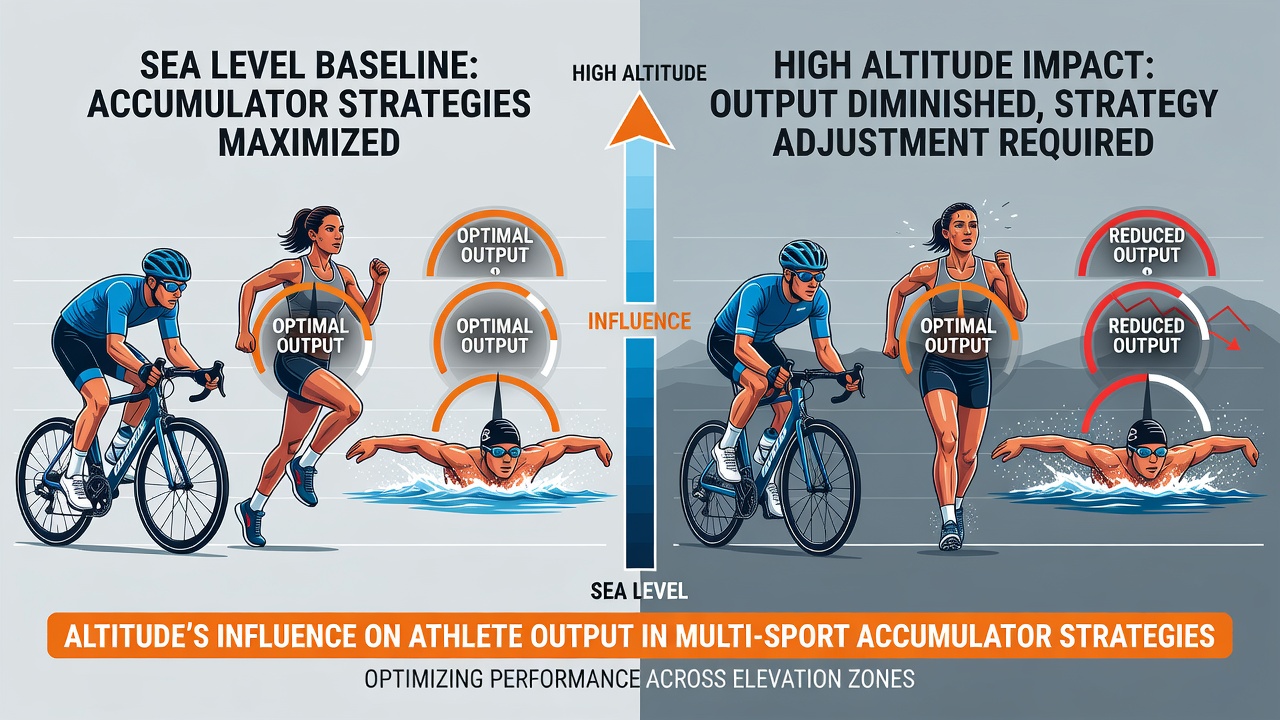
Research from institutions like the University of Innsbruck shows that reduced oxygen availability at elevations above 1500 meters alters cardiovascular responses, muscle efficiency, and recovery rates across multiple disciplines. Athletes who train or compete regularly at these heights develop increased red blood cell counts and improved lactate tolerance, while those arriving from sea level often experience measurable declines in sustained power output and decision-making speed during prolonged efforts. These physiological shifts create distinct patterns that influence outcomes in football matches, tennis sets, basketball quarters, and horse racing distances, thereby shaping how multi-sport accumulator selections get constructed when venues sit at varying altitudes. Data collected during international competitions indicates that football teams based in highland regions maintain higher pressing intensity and maintain possession longer when playing at home above 2000 meters. Visiting sides from coastal areas record lower sprint volumes and commit more errors in the final third as matches progress past the 60-minute mark. Observers note that these trends hold steady across South American and African leagues where altitude differentials exceed 1000 meters between competing clubs. Tennis players encounter parallel effects during matches scheduled at mountain resorts or high-elevation tournaments. Serve speeds remain relatively stable, yet rally lengths shorten because players fatigue faster when chasing balls across larger courts. Break-point conversion rates drop for those unaccustomed to thinner air, particularly in best-of-five formats that extend beyond three hours. Studies compiled by the Australian Institute of Sport highlight how acclimatization periods of seven to ten days can restore baseline movement efficiency for competitors entering events at 1800 meters or higher. Basketball contests show subtler but still measurable impacts, especially when teams travel across time zones to play at altitude. Indoor arenas mitigate some oxygen reduction, yet rebounding percentages and defensive closeouts decline after the third quarter for squads from lower elevations. Fast-break frequency decreases as players experience quicker onset of breathlessness during transition plays. Researchers tracking NBA and EuroLeague squads that visit venues above 1500 meters have documented consistent drops in field-goal accuracy from beyond the arc in the closing minutes of games. Horse racing presents another layer where altitude influences stride length, recovery between races, and finishing kick strength. Equine athletes stabled at higher elevations demonstrate superior oxygen utilization during sprints up to 2400 meters, while visitors from sea-level tracks often fade in the final 400 meters. Ground conditions compound these effects because cooler mountain air frequently pairs with firmer turf that favors certain running styles. Performance databases maintained by racing authorities in Colorado and Switzerland record these differentials across graded stakes events held throughout the summer calendar. In August 2026 several major fixtures will occur at notable elevations, including football qualifiers in Andean stadiums, tennis exhibitions in the Swiss Alps, and harness meetings at mountain circuits in North America. Accumulator builders examine historical outputs from these locations to weight selections toward athletes or teams with documented adaptation advantages. They cross-reference travel logs, recent training camp locations, and prior results at similar heights to identify where probability curves shift measurably. Multi-sport parlay strategies frequently incorporate these variables by pairing football home favorites at altitude with tennis players who have completed pre-tournament acclimatization blocks. Basketball unders on total points become more attractive when visiting teams arrive without adequate recovery time. In horse racing, bettors favor runners with recent starts at comparable elevations when constructing legs that include football and tennis wagers on the same slip. Such layering relies on objective performance metrics rather than intuition, because the physiological data produces repeatable edges across independent events. Olympic Committee resources detail standardized testing protocols that quantify these adaptations, while additional findings from Canadian sport institutes track how altitude exposure interacts with fixture congestion in team sports. These datasets allow systematic comparison of win probabilities when altitude differentials exceed 800 meters between opposing sides. What's interesting is how equipment variables interact with these conditions. Footballs travel farther in thinner air, altering set-piece trajectories and goalkeeper positioning. Tennis balls exhibit slightly different bounce characteristics on highland courts, prompting players to adjust swing paths and footwork patterns. Basketball trajectories show minor changes in arc due to reduced air resistance, though the effect registers smaller than in outdoor disciplines. Horse racing saddles and tack remain consistent, yet riders report subtle differences in horse breathing rates that affect pacing decisions. Recovery rhythms further modulate these influences. Teams or players returning to sea level after extended high-altitude exposure sometimes display temporary performance dips until hemoglobin levels normalize. This rebound effect appears in subsequent fixtures scheduled within 72 hours of descent, creating additional variables for accumulator timing. Data sets from multiple federations confirm that such transitions produce measurable variance in output metrics across the four sports.Practical Integration into Accumulator Construction
Analysts compile altitude-adjusted performance indexes that feed directly into probability models for multi-leg bets. They segment data by sport, elevation band, and acclimatization status, then apply these filters when selecting combinations. For instance, a football match at 2500 meters paired with a tennis encounter at 1700 meters and a basketball game at 1200 meters yields distinct risk profiles compared with all-sea-level selections. Horse racing legs add another dimension because equine responses differ from human patterns yet follow similar oxygen-availability curves.
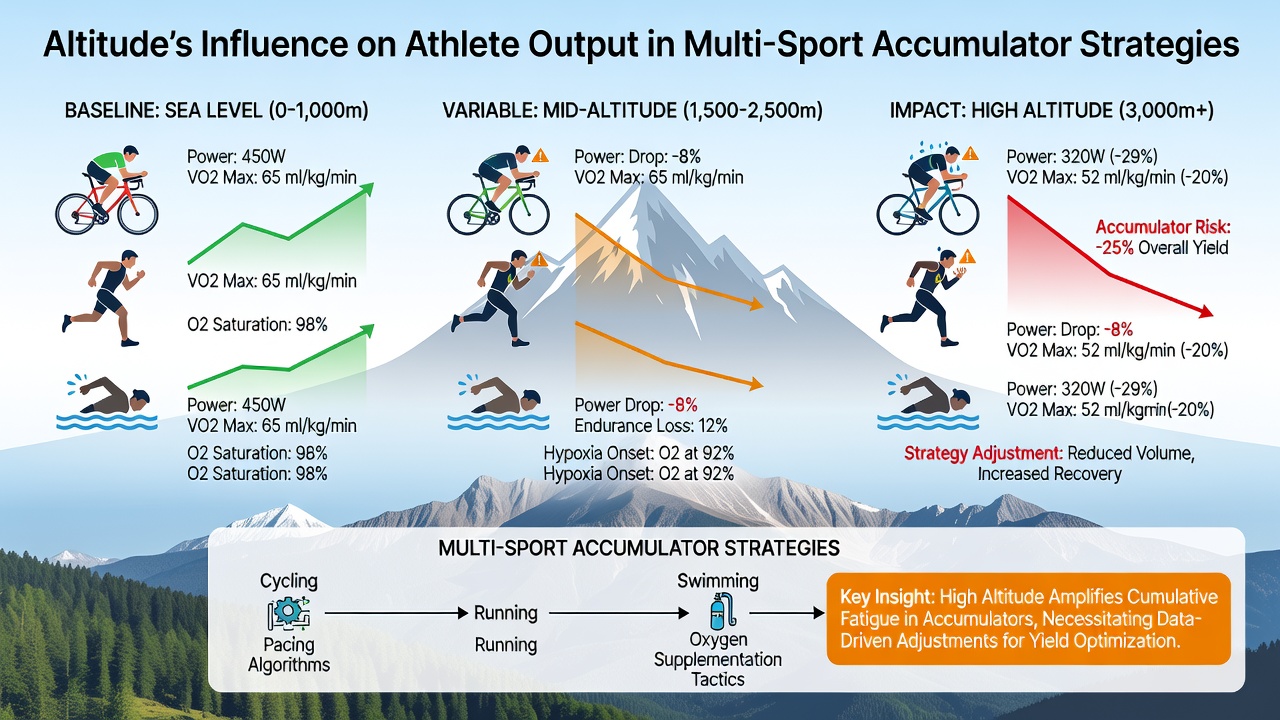
Those constructing accumulators therefore review venue elevations alongside recent travel histories and training locations. They monitor how quickly squads or individuals adapt when moving between altitude bands, noting that partial acclimatization often produces intermediate performance levels rather than full restoration. Statistical packages used by professional syndicates incorporate these variables as weighted factors that adjust baseline odds derived from form and head-to-head records.
Conclusion
Altitude exerts measurable, sport-specific effects on athlete output that accumulate across disciplines when multiple events feature significant elevation differences. Objective datasets from academic and Olympic sources supply the foundation for refining multi-sport accumulator selections, allowing systematic accounting for physiological realities rather than anecdotal assumptions. As more fixtures occur at varied heights through 2026 and beyond, these patterns will continue to inform structured approaches to combining football, tennis, basketball, and horse racing wagers.